Browse our short knowledge articles that help you create healthcare spaces that heal better, last longer, and work smarter.

Filter by media type to find exactly what you need.

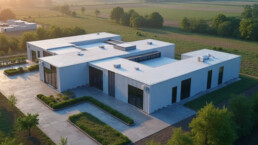
Designing for Rapid Deployment - Pop-Up Hospitals

Designing for Rapid Deployment: Pop-Up Hospitals


Hospitals can’t wait for blueprints when emergencies strike.

From natural disasters to public health crises, healthcare systems now need facilities that can be deployed, dismantled, or relocated - fast.

Kshititi Nagarkar, Lead Architect, Shree Designs, explores how pop-up hospitals and modular healthcare units are transforming the future of emergency preparedness.
✔ Key principles for rapid deployment design
✔ Balancing speed with safety and compliance
✔ How modularity builds long-term resilience

📖 Read the full article: https://lnkd.in/dd5mF9Jr
Healthcare Space Programming

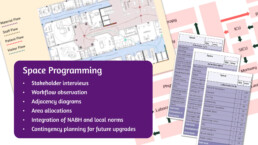
Building Better Hospitals: The Role of Healthcare Space Programming


Good hospital design starts long before the walls go up.
It starts with the questions we ask during programming.

In her latest article, Kshititi Nagarkar, Principal Architect Shree Designs shares why healthcare space programming is the most critical (and most overlooked) phase of planning a hospital. And how it aligns medical needs with built reality - before costly mistakes happen.
✔ Designing for flow, function, and future needs
✔ Avoiding inefficiencies and compliance risks
✔ Real examples from our work at Shree Designs

If you’re involved in planning, expanding, or upgrading a healthcare facility - this is worth a read.
Read the full article: https://www.linkedin.com/pulse/building-better-hospitals-role-healthcare-space-programming-nalmf
 

Sliding doors for patient rooms


A quiet upgrade that makes a big difference.
Sliding doors in patient rooms aren’t just space-savers - they improve accessibility, reduce noise, and support privacy. Ideal for small clinics, ICUs, and mobility-sensitive zones.

🚪 Move smarter, not harder.

Multi-Functional Rooms


When space is limited, flexibility isn’t a luxury - it’s a necessity.

Multi-functional rooms allow hospitals and clinics to do more with less. Whether it’s a consult room that converts into a counselling space, or a procedure room that doubles as isolation during a surge, the right design choices unlock utility without sacrificing comfort or compliance.

In this post, we explore how to plan for clinical adaptability without making the space feel compromised.

🧩 One room. Multiple uses. Zero confusion.

Viewless Rooms and Recovery


Not every patient gets a window - but every patient deserves support.

Studies show that access to natural views can reduce recovery time, stress, and even medication needs. But in large hospitals, viewless rooms are often unavoidable.

So how do we design these spaces to promote healing?

In our latest post, we share how smart lighting, material choices, and sensory cues can make windowless rooms feel less closed-in - and more care-driven.

🛏️ Because healing isn't just clinical - it's also environmental.

Designing for Gen Z Patients

Designing for Gen Z Patients


“They’re not used to waiting.”

“They want privacy—but not isolation.”

“They expect seamless digital journeys.”

That’s what we’re hearing in hospital boardrooms. And it points to one thing: Gen Z patients are reshaping healthcare design expectations.

At Shree Designs, we’ve identified 5 design shifts that future-ready hospitals, clinics, and diagnostic hubs must embrace:

1️⃣ Seamless digital–physical integration (check-ins, tele-consult pods)

2️⃣ Visual privacy, not isolation

3️⃣ Calm, sensory-friendly spaces for mental well-being

4️⃣ Inclusive and identity-affirming spaces

5️⃣ Waiting zones that feel like lounges, not queues

Healthcare is no longer just about clinical excellence—it’s about experience, trust, and accessibility.

👉 Read the full article here: https://www.linkedin.com/pulse/designing-gen-z-patients-what-healthcare-facilities-need-v1jsf

Transforming Commercial Spaces into State-of-the-Art Hospitals

Can a commercial building truly function as a hospital?


A few years ago, we were asked to convert a corporate office into a fully functional hospital within six months.

The Challenge?
Low floor-to-ceiling heights, narrow lift shafts, no medical gas provisions - and yet, the client needed OT complexes, ICUs, and patient wards that met NABH standards.

With rising land costs and tighter project timelines, many healthcare providers are converting existing commercial structures into medical facilities. But the transformation isn’t as simple as adding partitions and medical equipment.

It demands careful planning to ensure:
🔹 Seamless patient flow and emergency access
🔹 Structural, MEP, and HVAC upgrades for clinical safety
🔹 Compliance with NABH and NBC healthcare norms
🔹 Future flexibility for medical technology and expansion

Can we bridge the gap between commercial architecture and clinical precision?

This article by Kshititi Nagarkar, Lead Architect, Shree Designs explores "Transforming Commercial Spaces into State-of-the-Art Hospitals"

Designing Dedicated Staff Zones That Work


Healthcare isn’t just patient-centred - it’s staff-supported.

Doctors, nurses, and admin teams work long shifts, juggle emergencies, and need spaces that restore focus and energy. Yet in many hospitals, staff zones are afterthoughts - cramped, noisy, or repurposed from leftover space.

Well-designed staff areas improve:
✅ Team communication
✅ Staff well-being and retention
✅ Response time in clinical zones

In this post, we share how to plan dedicated, efficient, and adaptable staff zones that support care from the inside out.


Ready to start your next project?

© 2015 - Shree Designs – All rights reserved | Website designed & maintained by Mediavault

Privacy Preference Center