
Browse our short knowledge articles that help you create healthcare spaces that heal better, last longer, and work smarter.
Filter by media type to find exactly what you need.
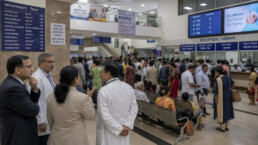
Hospitals Don’t Fail Because of Lack of Space. They Fail Because of Poor Planning.
When a hospital is struggling, the first instinct is usually to expand. More beds. Bigger OPD. Another floor.
In most cases, the space isn't the actual problem.
I've done enough facility audits to know that underperformance almost always traces back to the planning phase — specifically to questions that weren't asked before design began. Where departments were placed. How patient flow was sequenced. What the space looks like at peak hours.
These decisions get made once. And once the building is up, you live with them.
In my latest article I write about why this early phase matters so much, what gets skipped, and what it takes to get it right.
📖 Read here: https://lnkd.in/eiDCabXy
- Kshititi Nagarkar, Lead Architect, Shree Designs

What Changes Between Design Intent and Actual Execution
The gap between design intent and actual execution is real in every project.
After 16 years of healthcare design, here's what I've seen change most consistently — and why it matters more in healthcare than almost any other building type.
- Material substitutions that seem minor but compound quickly
- Services that take over space in ways drawings never anticipated
- The human scale getting lost once fit-out layers go in
- Design intent that survives construction but not operations
None of these is a failure of ambition. There are gaps that open up under real-world pressure — procurement timelines, site constraints, and budget decisions made in the moment.
The ones who close that gap are the ones who stay present through execution, not just through design.
Kshititi Nagarkar, Lead Architect - Shree Designs, breaks down each of these shifts and what she has learned to do differently as a result.
Read it here: https://lnkd.in/ddCCBR5i

Build, Expand, Or Upgrade Your Healthcare Centre?
One of the most consequential decisions a healthcare founder makes has nothing to do with the doctors they hire or the equipment they buy.
It is this: should we build something new, add to what we have, or fix what already exists?
Get that decision wrong and you overspend, overextend, or under-deliver. Get it right and your facility grows with intent — serving more patients, passing accreditations, and retaining staff.
We have just released a free downloadable guide to help healthcare professionals make this call with clarity:
Download it here: https://shreedesigns.in/BEU
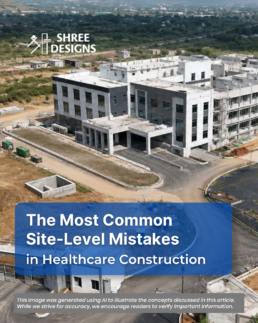
The Most Common Site-Level Mistakes in Healthcare Construction
In healthcare construction, site decisions become clinical decisions.
Orientation, drainage, vehicular movement, geotechnical planning, and utility placement can directly affect infection control, emergency access, maintenance, and long-term hospital performance.
Our latest article highlights the most common site-level mistakes in healthcare construction — and how to prevent them early.
Read here: https://shreedesigns.in/CommonConstMistakes