
Browse our short knowledge articles that help you create healthcare spaces that heal better, last longer, and work smarter.
Filter by media type to find exactly what you need.
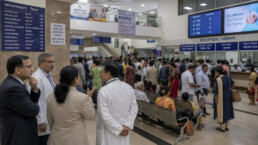
Hospitals Don’t Fail Because of Lack of Space. They Fail Because of Poor Planning.
When a hospital is struggling, the first instinct is usually to expand. More beds. Bigger OPD. Another floor.
In most cases, the space isn't the actual problem.
I've done enough facility audits to know that underperformance almost always traces back to the planning phase — specifically to questions that weren't asked before design began. Where departments were placed. How patient flow was sequenced. What the space looks like at peak hours.
These decisions get made once. And once the building is up, you live with them.
In my latest article I write about why this early phase matters so much, what gets skipped, and what it takes to get it right.
📖 Read here: https://lnkd.in/eiDCabXy
- Kshititi Nagarkar, Lead Architect, Shree Designs
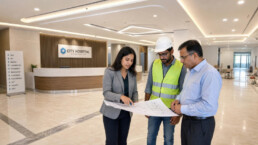
What Changes Between Design Intent and Actual Execution
The gap between design intent and actual execution is real in every project.
After 16 years of healthcare design, here's what I've seen change most consistently — and why it matters more in healthcare than almost any other building type.
- Material substitutions that seem minor but compound quickly
- Services that take over space in ways drawings never anticipated
- The human scale getting lost once fit-out layers go in
- Design intent that survives construction but not operations
None of these is a failure of ambition. There are gaps that open up under real-world pressure — procurement timelines, site constraints, and budget decisions made in the moment.
The ones who close that gap are the ones who stay present through execution, not just through design.
Kshititi Nagarkar, Lead Architect - Shree Designs, breaks down each of these shifts and what she has learned to do differently as a result.
Read it here: https://lnkd.in/ddCCBR5i

Designing for Zero Downtime: Keeping Hospitals Running During Renovations
Renovating a live hospital might be the toughest design challenge in healthcare.
Care doesn’t pause, ICUs don’t shift, and every detour, partition, and temporary space has clinical consequences.
In this short piece, Kshititi Nagarkar, Lead Architect - Shree Designs, shares five field-tested principles from real projects that helped hospitals stay fully functional while being rebuilt around the clock — from infection control to circulation logic to reducing staff cognitive load.
If you’re involved in healthcare operations, facilities, or clinical planning, we’d love to hear how your teams handle live-site upgrades — what’s worked, what hasn’t, and where the biggest friction lives.
Read the full article: https://lnkd.in/djmJifch

Designing for Rapid Deployment: Pop-Up Hospitals
Hospitals can’t wait for blueprints when emergencies strike.
From natural disasters to public health crises, healthcare systems now need facilities that can be deployed, dismantled, or relocated - fast.
Kshititi Nagarkar, Lead Architect, Shree Designs, explores how pop-up hospitals and modular healthcare units are transforming the future of emergency preparedness.
✔ Key principles for rapid deployment design
✔ Balancing speed with safety and compliance
✔ How modularity builds long-term resilience
📖 Read the full article: https://lnkd.in/dd5mF9Jr
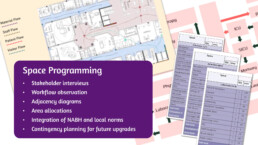
Building Better Hospitals: The Role of Healthcare Space Programming
Good hospital design starts long before the walls go up.
It starts with the questions we ask during programming.
In her latest article, Kshititi Nagarkar, Principal Architect Shree Designs shares why healthcare space programming is the most critical (and most overlooked) phase of planning a hospital. And how it aligns medical needs with built reality - before costly mistakes happen.
✔ Designing for flow, function, and future needs
✔ Avoiding inefficiencies and compliance risks
✔ Real examples from our work at Shree Designs
If you’re involved in planning, expanding, or upgrading a healthcare facility - this is worth a read.
Read the full article: https://www.linkedin.com/pulse/building-better-hospitals-role-healthcare-space-programming-nalmf

Designing for Gen Z Patients
“They’re not used to waiting.”
“They want privacy—but not isolation.”
“They expect seamless digital journeys.”
That’s what we’re hearing in hospital boardrooms. And it points to one thing: Gen Z patients are reshaping healthcare design expectations.
At Shree Designs, we’ve identified 5 design shifts that future-ready hospitals, clinics, and diagnostic hubs must embrace:
1️⃣ Seamless digital–physical integration (check-ins, tele-consult pods)
2️⃣ Visual privacy, not isolation
3️⃣ Calm, sensory-friendly spaces for mental well-being
4️⃣ Inclusive and identity-affirming spaces
5️⃣ Waiting zones that feel like lounges, not queues
Healthcare is no longer just about clinical excellence—it’s about experience, trust, and accessibility.
👉 Read the full article here: https://www.linkedin.com/pulse/designing-gen-z-patients-what-healthcare-facilities-need-v1jsf
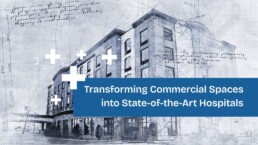
Can a commercial building truly function as a hospital?
A few years ago, we were asked to convert a corporate office into a fully functional hospital within six months.
The Challenge?
Low floor-to-ceiling heights, narrow lift shafts, no medical gas provisions - and yet, the client needed OT complexes, ICUs, and patient wards that met NABH standards.
With rising land costs and tighter project timelines, many healthcare providers are converting existing commercial structures into medical facilities. But the transformation isn’t as simple as adding partitions and medical equipment.
It demands careful planning to ensure:
🔹 Seamless patient flow and emergency access
🔹 Structural, MEP, and HVAC upgrades for clinical safety
🔹 Compliance with NABH and NBC healthcare norms
🔹 Future flexibility for medical technology and expansion
Can we bridge the gap between commercial architecture and clinical precision?
This article by Kshititi Nagarkar, Lead Architect, Shree Designs explores "Transforming Commercial Spaces into State-of-the-Art Hospitals"