
Interior Design Trends That Elevate Healthcare Spaces
Healthcare spaces have evolved beyond sterile white walls and clinical aesthetics. Today’s hospitals, clinics, and wellness centres prioritise functionality and warmth, ensuring patients feel comfortable without compromising hygiene or efficiency.
But how do you design an inviting and practical healthcare space? The answer lies in adapting trends from mainstream interior design to create environments that promote healing and efficiency.
Here’s how top interior design trends are shaping the future of healthcare spaces.
1. Minimalism: Clean, Uncluttered & Efficient
Why It Works in Healthcare Spaces
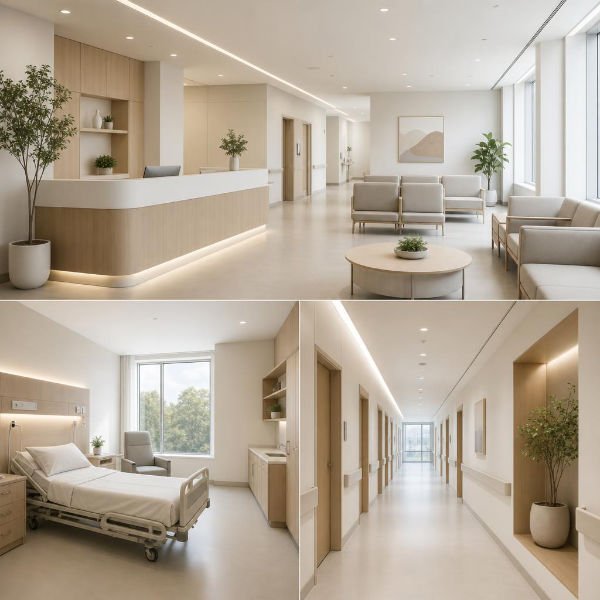
Minimalism is a functional approach that enhances organisation and workflow. In hospitals and clinics, clutter-free environments lead to faster access to medical tools, better hygiene, and a calming patient atmosphere.
A study by Hook et al. (2021) found that 80% of research links minimalism to better well-being, showing how simplicity can improve mental health.
How to Adapt It for Healthcare
- Streamlined furniture: Built-in storage keeps surfaces clear while ensuring essentials are within reach.
- Neutral colour palettes: soft beiges, greys, and muted tones feel clean but not cold.
- Simple, intuitive layouts: Wide, open pathways ensure smooth patient and staff movement.
Where It Works Best:
- Reception and waiting areas: Minimalist furniture and open layouts reduce stress.
- Patient rooms: Clutter-free environments feel more restful.
2. Japandi: The Perfect Blend of Warmth & Functionality
Why It Works in Healthcare Spaces
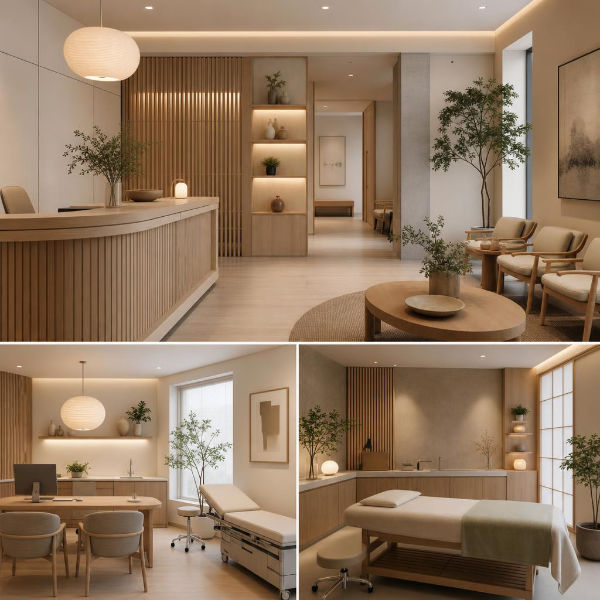
Japandi—a fusion of Japanese and Scandinavian design—is perfect for healthcare because it balances serenity with function. It emphasises natural materials, neutral tones, and thoughtful simplicity, making medical spaces feel soothing rather than stark.
Studies show that natural materials in healthcare spaces can enhance patient recovery by promoting relaxation.
How to Adapt It for Healthcare
- Use natural wood finishes: Light oak, walnut, or bamboo add warmth.
- Soft lighting: Warm LED fixtures create a cosy, non-intrusive ambience.
- Functional simplicity: Multi-use spaces with adaptable furniture enhance efficiency.
Where It Works Best:
- Medspas & wellness centres: Creates a tranquil, spa-like atmosphere.
- Consultation rooms: Make doctor-patient interactions feel more personal and welcoming.
Aesthetic design is more than just looks – it directly impacts patient comfort and healing.
Learn more about creating patient-friendly healthcare spaces in our blog: 5 Patient-Friendly Designs for Your Healthcare Facility.
3. Biophilic Design: Bringing Nature into Healthcare
Why It Works in Healthcare Spaces
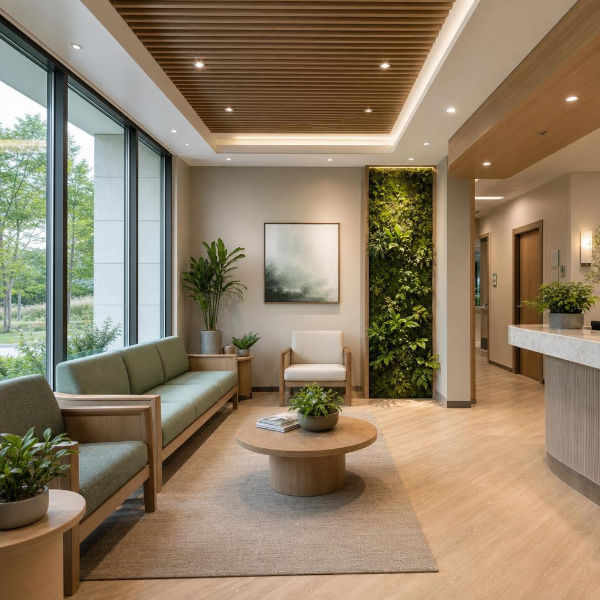
Nature has proven therapeutic benefits, and biophilic design incorporates natural elements into medical environments. Research shows that access to greenery can lower stress, enhance recovery, and improve air quality—critical factors in both hospitals and clinics.
Hospitals using biophilic elements report a 22% reduction in patient stress levels and faster recovery times.
How to Adapt It for Healthcare
- Living green walls & indoor plants: Improve air quality and create a calming effect.
- Large windows & natural light: Enhances patient well-being and reduces reliance on artificial lighting.
- Nature-inspired colour schemes: Earthy tones like greens, browns, and deep blues promote tranquillity.
Where It Works Best:
- Waiting areas & lounges: A connection to nature makes waiting times less stressful.
- Patient rooms & recovery areas: Promotes faster healing and relaxation.
4. Modern & High-Tech Interiors: Smart Design for Healthcare Efficiency
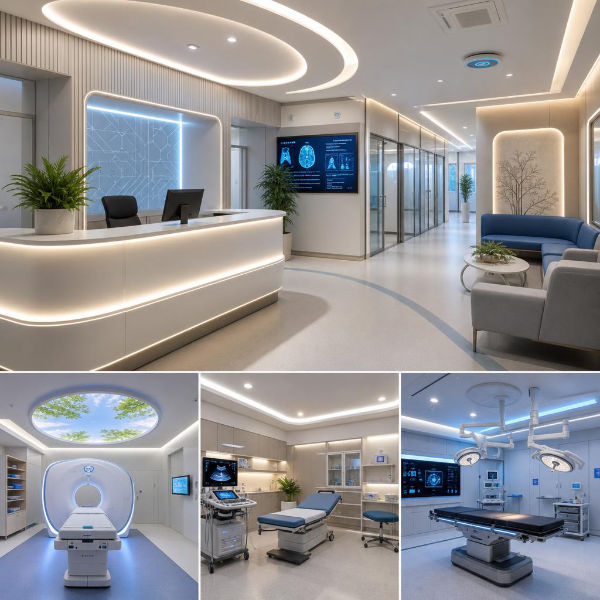
Why It Works in Healthcare Spaces
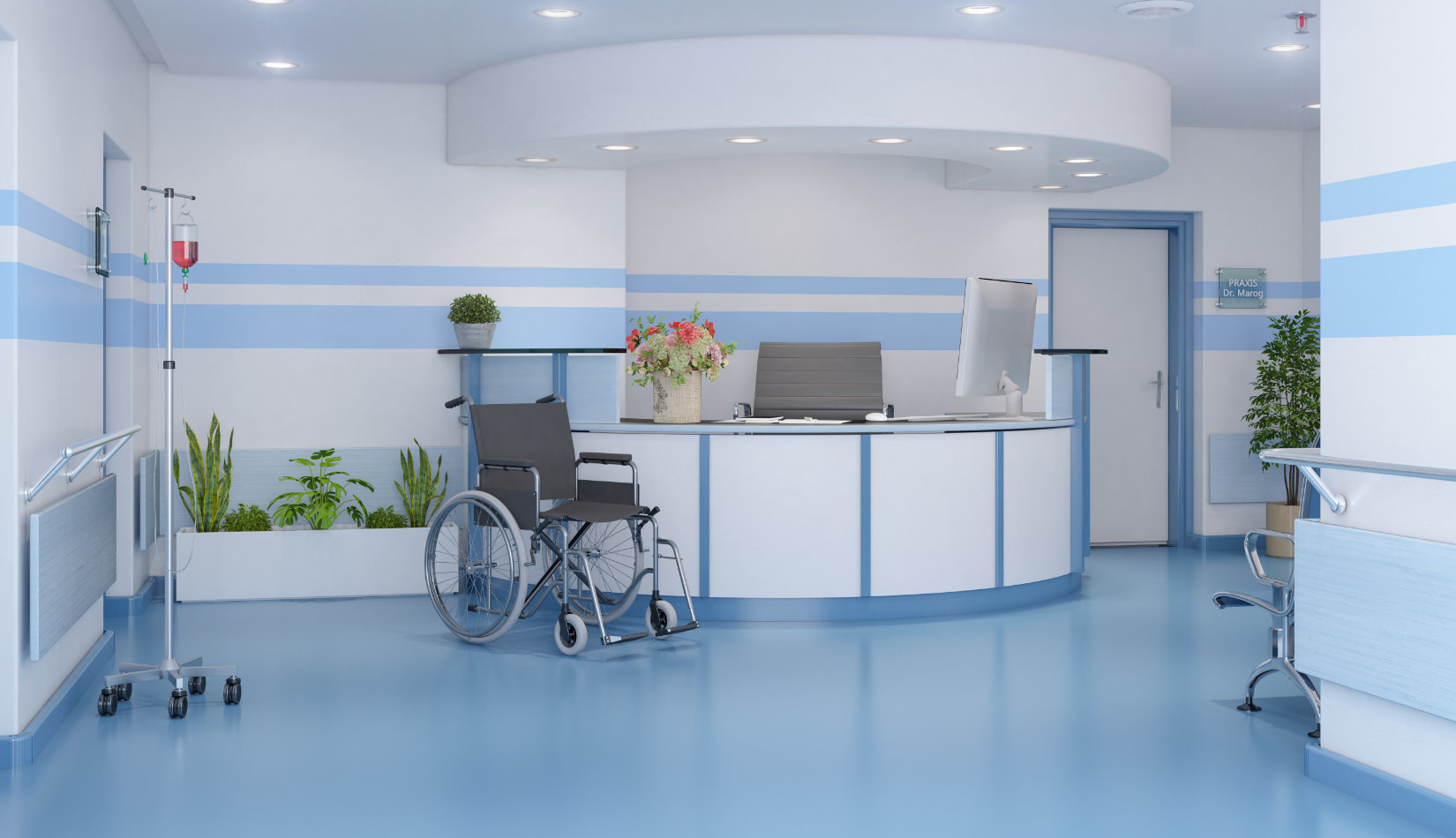
Modern design is all about the seamless integration of technology with aesthetics. This means functional layouts combined with advanced smart systems for better workflow, patient experience, and hygiene in healthcare settings.
How to Adapt It for Healthcare
- Integrated smart technology: Touchless doors, voice-activated lighting, and AI-powered scheduling improve efficiency.
- Sleek materials: High-quality laminates, antimicrobial surfaces, and minimalist textures keep spaces modern yet practical.
- Dynamic layouts: Flexible furniture and convertible spaces maximise usability.
Where It Works Best:
- Surgical & diagnostic centres: High-tech yet visually appealing spaces improve both function and comfort.
- Telemedicine hubs: Clean, modern setups enhance virtual consultations.
5. Hospitality-Inspired Healthcare Design: A More Comfortable Patient Experience
Why It Works in Healthcare Spaces
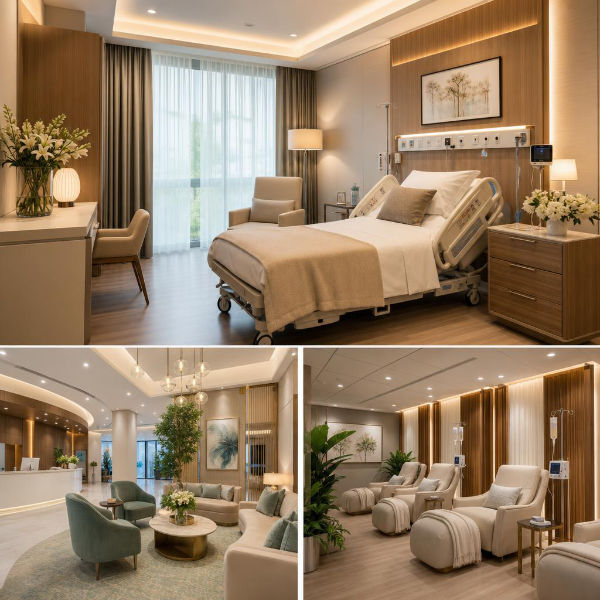
Patients today expect more than just medical care—they want a comfortable, dignified experience. Borrowing from hotel and hospitality design, healthcare spaces can feel more welcoming, less clinical, and more patient-focused.
How to Adapt It for Healthcare
- Luxury-inspired patient rooms: Cozy furniture, soft linens, and warm lighting elevate comfort.
- Inviting lobbies & waiting areas: Lounge-style seating and stylish decor make the space more welcoming.
- Better acoustics & soundproofing: Enhances privacy and reduces hospital noise.
Where It Works Best:
- Private hospitals & speciality clinics: Luxury-inspired designs cater to patient expectations.
- Wellness centres & IV therapy lounges: High-end hospitality design enhances the relaxation experience.
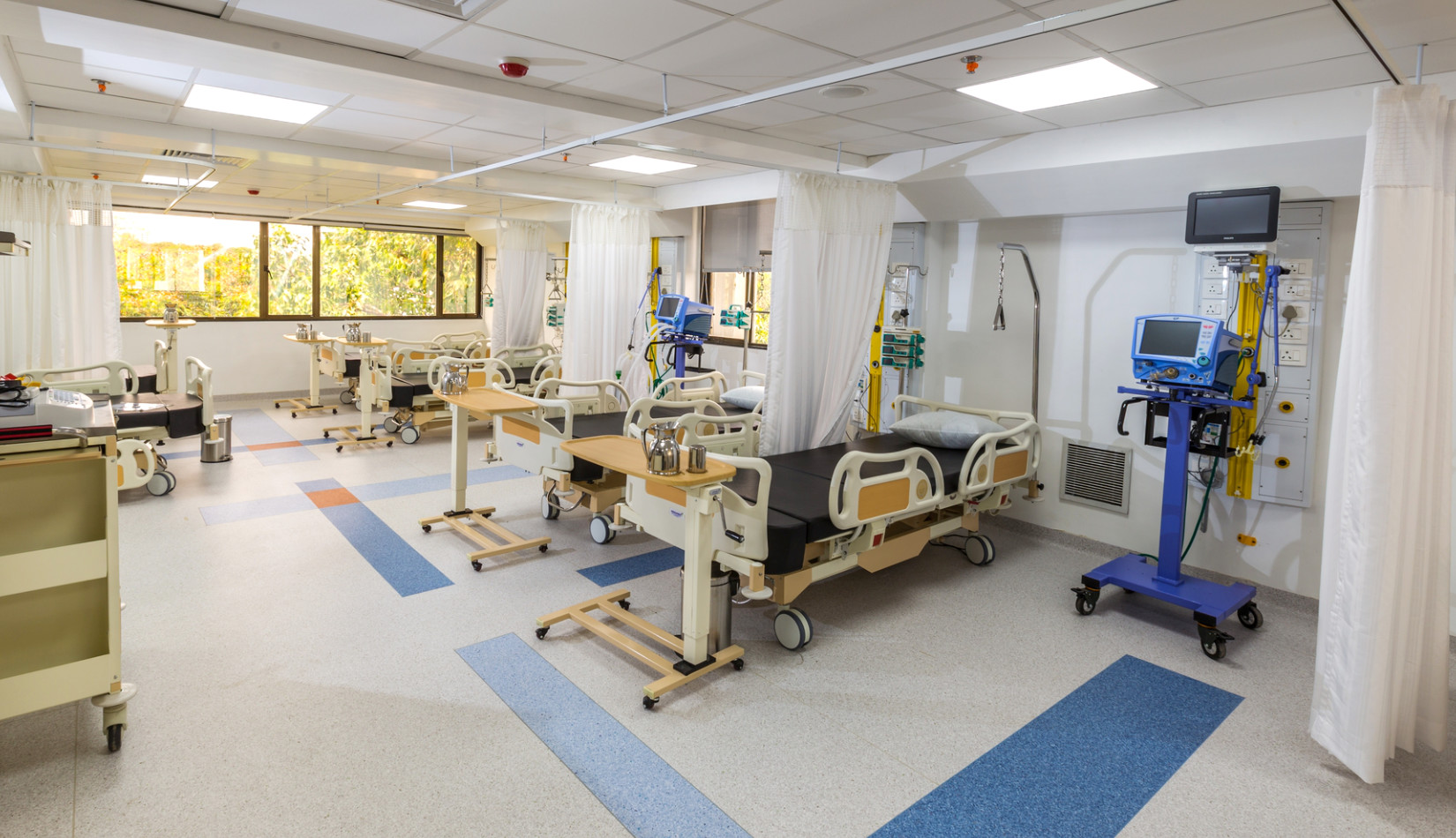
Designing a healthcare space isn’t just about aesthetics—it’s about ensuring safety, hygiene, and functionality.
Read our guide on 5 Design Tips to Keep Your Healthcare Facility Safe.
Final Thoughts: Designing Healthcare Spaces That Feel Less Clinical & More Human
Gone are the days when hospitals and clinics had to look cold and sterile. By integrating mainstream design trends like minimalism, Japandi, biophilic elements, and hospitality-inspired aesthetics, healthcare spaces can be both highly functional and visually appealing.
- Better patient experiences
- Enhanced efficiency & workflow
- Aesthetic yet functional design
The future of healthcare design isn’t just about medical efficiency—it’s about creating spaces that promote healing, reduce stress, and feel inviting.
Is Your Healthcare Space Designed for Comfort & Functionality?
Let’s talk about innovative, aesthetic healthcare design solutions if you want to redesign or optimise your hospital, clinic, or MedSpa.
Related Posts

Successful Brownfield Healthcare Projects
Facility upgrades in hospital design and construction are inevitable, whether it is to accommodate…

Healthcare Design for Greenfield Projects
Setting up a new healthcare centre, hospital, and clinic can be extremely rewarding - personally…

Repurpose and Resuscitate!
Over the last few years, healthcare organisations have demonstrated a tendency to protect and…
Adaptive Reuse of Buildings
Malls are going through a downturn as there is a decrease in the number of people spending hours in…

Retrofitting For Healthcare Facilities
The word “retrofit” as we are aware suggests fitting in or on to an existing structure OR to…